Keynote Speaker
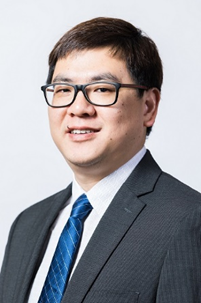
Yi Huang
Professor, School of Materials Science and Engineering, Xi’an Jiaotong University, ChinaSpeech Title: On the Stability of Metal-Organic Frameworks and the Impacts on Their Environmental Applications
Abstract: Metal-organic frameworks (MOFs), also known as porous coordination polymers or organic–inorganic porous networks, are an emerging class of materials renowned for their exceptional structural versatility, tunable chemistry, high surface areas, and permanent porosity. Among them, zeolitic imidazolate frameworks (ZIFs) represent an important subclass featuring zeolite-type topologies and have found widespread applications in catalysis, separations, energy storage, and biomedicine. However, the practical deployment of ZIFs is severely constrained by their limited stability, as many undergo structural hydrolysis and degradation when exposed to water and/or elevated temperatures.
This Keynote will review the known mechanisms responsible for structural degradation in common MOFs and ZIFs. It will then discuss recent methods and strategies developed to enhance their thermal and hydrolytic stability. Particular emphasis will be placed on systematic mechanistic studies underlying these improvements, based on our recent research on several industrially relevant ZIF systems, including ZIF-8, ZIF-67, ZIF-L, and cobalt-based ZIFs. Our findings provide new and practically important insights into evaluating and improving the stability of MOF/ZIF powders, surface coatings, and continuous membranes under aqueous and high-temperature operating conditions. Finally, the talk will highlight the enhanced performance of structurally stabilised ZIFs in environmental remediation applications, particularly in separation processes, demonstrating their promise for real-world deployment.
Biography: Professor Harvey Yi Huang received his PhD from Monash University (Australia) in 2011. Following that, he worked in the Department of Chemical Engineering and Materials Science at the University of Minnesota–Twin Cities, and subsequently held a Senior Research Fellow position at the Georgia Institute of Technology before joining the University of Edinburgh (UoE).
At UoE, Professor Huang leads a multidisciplinary research team focused on the design of advanced functional materials, membrane separation technologies, sustainable water treatment solutions, and water-stable catalysts for industrial and environmental applications. His research places a strong emphasis on two-dimensional (2D) materials, such as graphene, metal-organic frameworks (MOFs), and Mxenes, and their nanostructure engineering. By bridging fundamental materials innovation with scalable technologies, his work addresses critical global challenges in sustainability and resource management. Professor Huang’s research programme is strongly supported by industrial collaboration, with over £2.8 million secured as principal investigator for fundamental graphene and MOF research and commercialisation. In recognition of his contributions, he has been elected Fellow of the Royal Society of Chemistry (FRSC), Fellow of the Institute of Materials, Minerals and Mining (FIMMM), Fellow of the International Association of Advanced Materials (FIAAM), and Fellow of the International Association for Carbon Capture (FIACC).
He has published extensively in leading international journals, including Science, Angewandte Chemie, Matter, Materials Today, ACS Catalysis, Journal of Membrane Science, ACS Applied Materials & Interfaces, and Journal of Catalysis. Professor Huang also serves in several senior editorial roles, including Editor of Separation and Purification Technology (IF 9.0) and Results in Engineering (IF 7.9), and as an Editorial Board Member of Advanced Membranes (IF 9.5), Green Chemical Engineering (IF 7.6), and Sustainability (IF 3.3). His achievements have been recognised by numerous awards, including the 2022 RINENG Distinguished Young Investigator Award, the 2022 ISPT-BMS Young Membrane Scientist Award, the 2023 Separation and Purification Technology Distinguished Young Scholar Award, and the 2024/2025 EUSA Teaching Award – Teacher of the Year (CSE)..