Keynote Speakers
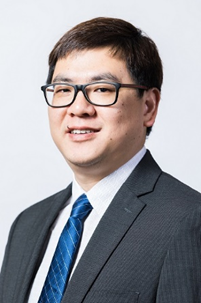
Harvey Yi Huang
Professor, School of Materials Science and Engineering, Xi’an Jiaotong University, ChinaSpeech Title: On the Stability of Metal-Organic Frameworks and the Impacts on Their Environmental Applications
Abstract: Metal-organic frameworks (MOFs), also known as porous coordination polymers or organic–inorganic porous networks, are an emerging class of materials renowned for their exceptional structural versatility, tunable chemistry, high surface areas, and permanent porosity. Among them, zeolitic imidazolate frameworks (ZIFs) represent an important subclass featuring zeolite-type topologies and have found widespread applications in catalysis, separations, energy storage, and biomedicine. However, the practical deployment of ZIFs is severely constrained by their limited stability, as many undergo structural hydrolysis and degradation when exposed to water and/or elevated temperatures.
This Keynote will review the known mechanisms responsible for structural degradation in common MOFs and ZIFs. It will then discuss recent methods and strategies developed to enhance their thermal and hydrolytic stability. Particular emphasis will be placed on systematic mechanistic studies underlying these improvements, based on our recent research on several industrially relevant ZIF systems, including ZIF-8, ZIF-67, ZIF-L, and cobalt-based ZIFs. Our findings provide new and practically important insights into evaluating and improving the stability of MOF/ZIF powders, surface coatings, and continuous membranes under aqueous and high-temperature operating conditions. Finally, the talk will highlight the enhanced performance of structurally stabilised ZIFs in environmental remediation applications, particularly in separation processes, demonstrating their promise for real-world deployment.
Biography: Professor Harvey Yi Huang received his PhD from Monash University (Australia) in 2011. Following that, he worked in the Department of Chemical Engineering and Materials Science at the University of Minnesota–Twin Cities, and subsequently held a Senior Research Fellow position at the Georgia Institute of Technology before joining the University of Edinburgh (UoE).
At UoE, Professor Huang leads a multidisciplinary research team focused on the design of advanced functional materials, membrane separation technologies, sustainable water treatment solutions, and water-stable catalysts for industrial and environmental applications. His research places a strong emphasis on two-dimensional (2D) materials, such as graphene, metal-organic frameworks (MOFs), and Mxenes, and their nanostructure engineering. By bridging fundamental materials innovation with scalable technologies, his work addresses critical global challenges in sustainability and resource management. Professor Huang’s research programme is strongly supported by industrial collaboration, with over £2.8 million secured as principal investigator for fundamental graphene and MOF research and commercialisation. In recognition of his contributions, he has been elected Fellow of the Royal Society of Chemistry (FRSC), Fellow of the Institute of Materials, Minerals and Mining (FIMMM), Fellow of the International Association of Advanced Materials (FIAAM), and Fellow of the International Association for Carbon Capture (FIACC).
He has published extensively in leading international journals, including Science, Angewandte Chemie, Matter, Materials Today, ACS Catalysis, Journal of Membrane Science, ACS Applied Materials & Interfaces, and Journal of Catalysis. Professor Huang also serves in several senior editorial roles, including Editor of Separation and Purification Technology (IF 9.0) and Results in Engineering (IF 7.9), and as an Editorial Board Member of Advanced Membranes (IF 9.5), Green Chemical Engineering (IF 7.6), and Sustainability (IF 3.3). His achievements have been recognised by numerous awards, including the 2022 RINENG Distinguished Young Investigator Award, the 2022 ISPT-BMS Young Membrane Scientist Award, the 2023 Separation and Purification Technology Distinguished Young Scholar Award, and the 2024/2025 EUSA Teaching Award – Teacher of the Year (CSE)..
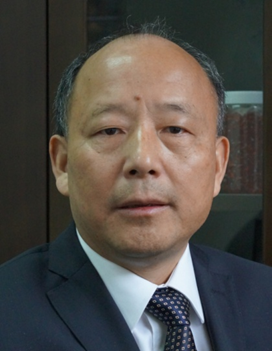
Long Yu
Professor, Chief Scientist of Institute of Chemistry, Henan Academy of Sciences, ChinaSpeech Title: Starch-based Materials Reinforced by Cellulose Nano-crystals from Different Resources and Fibrillary Celluloses with Different Strength and Diameter/Length Ratios
Abstract: Starch/cellulose composite is one of the most promising systems since both matrix and reinforce agent are renewable eco-friendly materials and have same chemical unite glucose, which results in an excellent compatibility. In this presentation, development of starch-based materials reinforced by cellulose nano-crystals from different resources and fibrillary celluloses with different strength and diameter/length ratios will be systematically discussed, in particular the starch-based films used for edible packaging and medicine capsules. Starch-based self-reinforced composites will be also discussed. As expected, addition of crystals increased the Young’s modulus and tensile strength of starch-based materials and decreased elongation at break. The effect of macro- and nano-fibrillar celluloses on the starch films were systematically investigated based on the microstructures, compatibility and mechanical performances. Results showed that the FCs increased modulus (about 170%) and tensile strength (about 180%) significantly as expected since they are well-compatible and some chemical interactions. The nano-fibrillary celluloses (CNFs) improve the toughness (about 20%) of the starch film more efficiently, which improved the well-recognized weakness of starch-based materials. The nano-scale roughness on the surface of the starch film caused by different shrinkage ratios between starch and CNFs during drying reduced water sensitivity, which is another well-recognized weakness of starch film.
 Figure-1 Developed and commercialized starch-based materials and composites.
 Biography: Prof Long Yu is currently Chief Scientist of Institute of Chemistry, Henan Academy of Sciences; China; Former Director of Sino-Singapore International Joint Research Institute and Professor in South China University of Technology. Prof Long Yu used to work in CSIRO, Australia as Principal Scientist for 18 years. Prof Yu has had more than 230 SCI papers published and citation time is more than 23000 (h-index 74). He has been selected as a Fellow of Royal Australian Chemical Institute in 2002, and currently been pointed as Editorial Board of 8 SCI journals and Chairs or Session Chains for many international conferences. In the last 20 years, Prof Yu has been working on various polymeric materials from renewable resources. He has successfully developed and commercialized 9 products through spinning-off manuscript companies or transforming developed techniques to industries, including various starch-based materials and products, such as pure starch-based plastics and medicine capsules and loss field foam. Recently he has been working on various slow-release fertilizer, in particular the SRF with water retention using starch-based hydrogels.
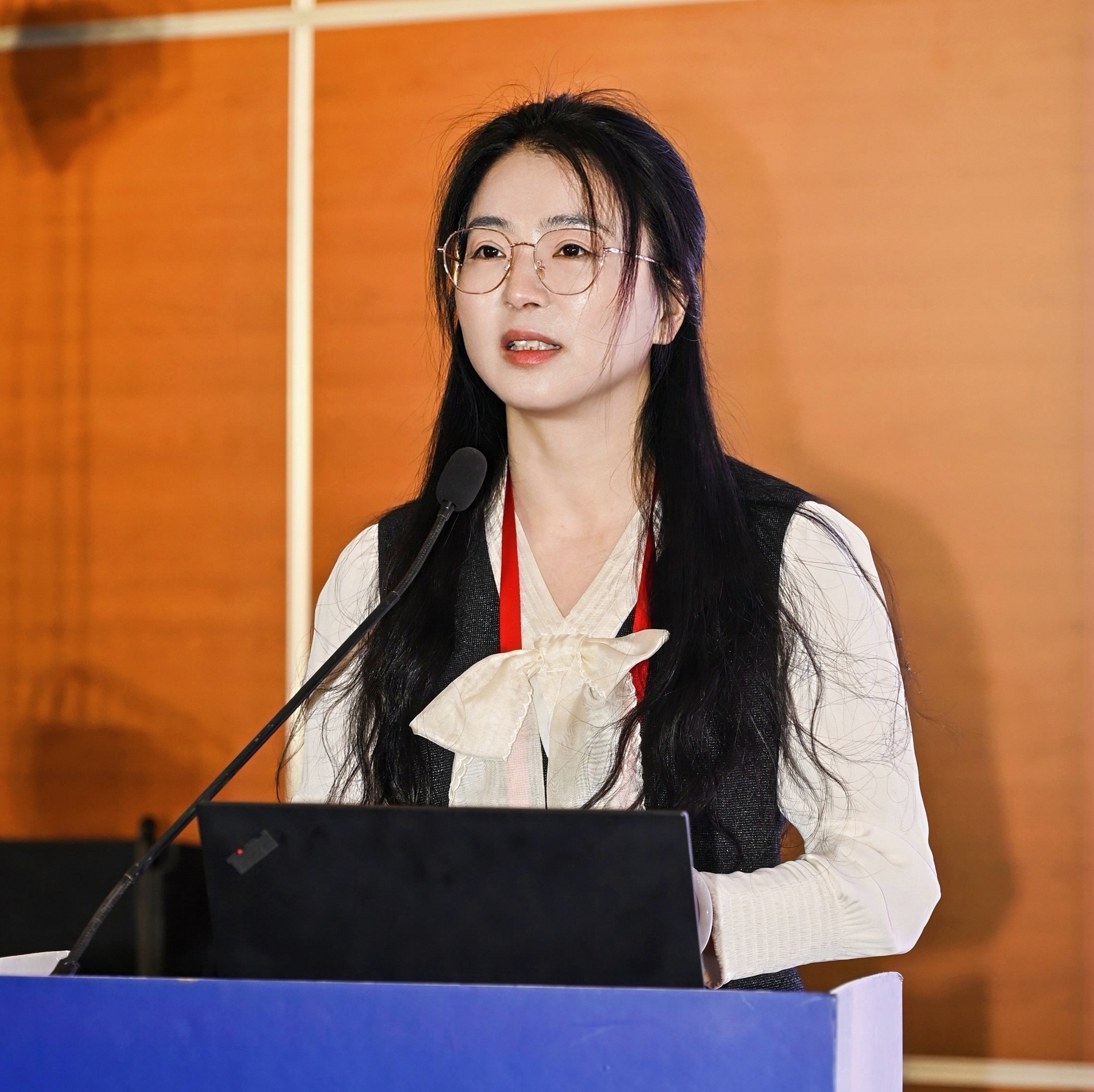
Yanhui Chen
Professor & PhD Supervisor, National Young Talent, School of Chemistry and Chemical Engineering, Northwestern Polytechnical University, China;Speech Title: Thermal Management Materials and Modules
Abstract: With the advent of the 5G era, new-generation electronic devices are developing toward miniaturization, integration and intelligence, which further increases the heat generation efficiency of equipment and seriously threatens the working performance and service life of electronic devices. Thermal management materials are the key materials to solve the heat dissipation problem in modern electronic packaging technology. The team has carried out a series of research work on the development and application of advanced thermal management materials:
1. Constructing lightweight and efficient heat transfer structures via advanced methods such as chemical in-situ conversion;
2. Loading nucleating agents on the heat transfer structures to synergistically improve the supercooling resistance and leakage-proof performance of phase change materials;
3. Developing the "heat conduction-storage integrated" thermal management materials with high thermal conductivity, high enthalpy, excellent leakage resistance and cycling stability;
4. Exploring the application of the self-developed modules containing the "heat conduction-storage integrated" thermal management materials in the thermal management of instantaneous high-power chips.
Keywords
Thermal Management Materials, Phase Change Composites, Thermal Conductivity, Heat Storage High-power Chips
Biography: Professor Yanhui Chen is currently a Professor and PhD Supervisor at the School of Chemistry and Chemical Engineering, Northwestern Polytechnical University (NWPU), China, and a recipient of the National Young Talent Program. She received her B.S. degree in Polymer Materials and Engineering from the College of Polymer Science and Engineering, Sichuan University in 2008, and her Ph.D. in Materials Processing Engineering from the same institution in 2013 under the supervision of Prof. Zhongming Li (National Science Fund for Distinguished Young Scholars & Changjiang Scholar). From November 2011 to November 2013, she conducted joint Ph.D. research as a visiting scholar in the group of Prof. Benjamin S. Hsiao, a world-renowned polymer physicist, at the Department of Chemistry, State University of New York at Stony Brook, supported by the China Scholarship Council (CSC) Program. Since 2014, She worked at the School of Chemistry and Chemical Engineering, Northwestern Polytechnical University (NWPU), China.
Her research focuses on the design, fabrication and application of advanced functional materials for thermal management, especially heat conduction-storage integrated composites for high-power electronic devices. She has led over 18 national and provincial research projects in this field, published over 60 papers in peer-reviewed international journals, like Advanced Materials, ACS Nano, Composites Science and Technology, and applied/issued 17 Chinese Patents. She also has some social academic positions: Member of the First Committee of the Micro-Nano System Thermal Management Branch of the Chinese Micron Nanotechnology Society (January 31, 2026 - January 31, 2031), Member of the First Committee of the Polymer and Polymer Engineering Professional Committee of the Chinese Chemical Society (December 2024 - December 2029), Member of the First Committee of the Electronic Chemicals Professional Committee of the Chinese Chemical Society (February 2023 - February 2028) and Member of the 41st Council of the Chinese Chemical Society (November 2022 - November 2027).
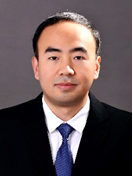
Jianxi Liu
Professor, Northwestern Polytechnical University, ChinaSpeech Title: Polymer Functionalized nanoMOFs for Aqueous Lubrication and Drug Delivery
Abstract: Synergetic therapy is an emerging platform for the treatment of Osteoarthritis (OA). The construction of porous nanocarriers with good lubricating performance and stimuli-responsive drug release is significant for the synergetic therapy of OA. Metal-organic frameworks (MOFs) have been extensively used as nanocarriers for drug delivery, cancer therapy, and bioimaging. However, no tenacious hydration layer existed on the surface of MOFs to achieve good aqueous lubrication. We report hybridization of polymer microgel and polymer brushes with drug-loaded MOFs nanoparticles (nanoMOFs) that can achieve excellent aqueous lubricating performance and anti-inflammatory effect for the synergistic therapy of OA. Our work establishes multifunctional biolubricant system for efficient OA treatment and biomedical application.
Biography: Jianxi Liu is a professor in Northwestern Polytechnical University. He obtained his Ph.D. degree from Karlsruhe Institute of Technology in 2015, Germany. He performed postdoctoral research at the Northwestern University in the United States from 2016 to 2018. Starting from 2018, he has opened his independent research career at Northwestern Polytechnical University, China. In recent years, he conducted systematic research on synthesis and engineering applications of functional nanomaterials, polymer materials, composite materials to solve the basic scientific and technological issues. His research interests focus on Nanofabrication, Optical Sensing, Biolubrication and Multifunctional Coatings, and he has published more than 120 papers.
Speakers will be updated…